How Snakes, Lizards, and Turtles Survive Winter in Indiana

Jim Horton
In the cold winters of Indiana, with temperatures plunging well below freezing, many of the state's reptiles face a challenging time. Snakes, lizards, and turtles, all cold-blooded creatures, are unable to generate their own body heat and must rely on external temperatures to regulate their body temperature. As winter sets in, these reptiles enter a state of dormancy, seeking shelter and adapting to survive the cold months. This process, called brumation, is similar to hibernation in mammals, but it involves a lower metabolic rate and can look quite different depending on the species.
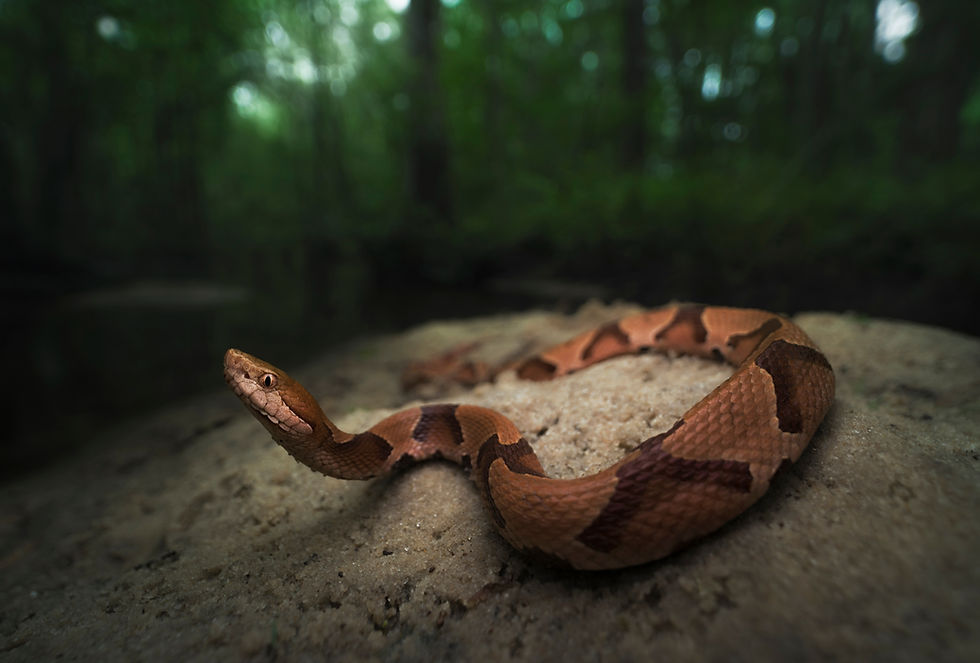
In Indiana, snakes are among the most commonly encountered reptiles that need to deal with the winter cold. Common species, like the Eastern garter snake, northern water snake, and copperhead, have adapted well to colder climates by entering brumation.

During brumation, snakes significantly reduce their metabolic rate and enter a state of dormancy. They do not sleep throughout the winter but become much less active, moving very little and eating even less, if at all. Their need for food declines as their metabolism slows down. To survive, snakes need to find a shelter where they can avoid freezing temperatures and remain insulated. The most common hiding places for snakes in Indiana include rock crevices, animal burrows, and human made structures.
Many species of snakes will burrow underground or hide in natural rocky crevices, such as those found in limestone outcroppings or in the soil near the roots of trees. Snakes often utilize abandoned burrows of small mammals like groundhogs, squirrels, or rabbits. These burrows are deep enough to keep the snakes from freezing, providing a stable temperature range for brumation.

Occasionally, snakes will take refuge in basements, crawl spaces, or other sheltered areas near human dwellings, where the temperature is more stable. Snakes may group together during brumation, a behavior known as "hibernaculum aggregation," in which they share a warm space with other snakes to conserve heat.
Indiana is home to six species of lizards, such as the Eastern fence lizard and the five-lined skink. While lizards are not as prevalent as snakes, they face similar survival challenges in winter due to their cold-blooded nature.
Lizards also undergo brumation, though they tend to have less of a communal approach to it compared to snakes. During brumation, their body temperatures drop, and their activity levels become minimal. Depending on the species, some lizards may stay dormant for the entire winter, while others may become active occasionally if the weather warms up briefly. Lizards in Indiana seek shelter in similar ways to snakes, with an emphasis on finding deep, insulated refuges where they can avoid freezing.
Some species may seek refuge in the cracks of tree bark or under logs. Natural areas such as
piles of rocks or leaf litter provide important shelter. These materials help to retain heat from the
sun and can offer some insulation against freezing temperatures. Human structures are often used for winter shelter. Like snakes, lizards may seek warmth in human structures, under porches or in cracks in walls.
Turtles are perhaps the most well-known cold-weather survivors in Indiana. While many species of turtles, such as the Eastern box turtles and painted turtles, are commonly found in the state, they must find creative ways to handle winter’s chill.

Turtles are ectothermic and must enter a state of dormancy during the winter. However, unlike
snakes and lizards, many turtle species in Indiana take to the water, where they can survive the cold in a state of semi-dormancy. Turtles’ brumation processes vary:
Aquatic turtles, like the painted turtle and snapping turtle, are able to submerge themselves in the mud at the bottom of lakes, ponds, or slow-moving streams. They enter a dormant state where their metabolism is dramatically slowed, allowing them to survive with minimal oxygen and food.
Land turtles, such as the box turtle, may dig into the soil or find deep leaf piles to shelter in. They burrow into the earth or leaf litter to avoid freezing temperatures, where they remain relatively inactive for the duration of winter.
For aquatic species, the bottom of ponds, lakes, or streams is a common winter refuge. The
water’s temperature is more stable than air temperature, and turtles can dig into the mud to remain insulated.
The winters in Indiana can be unpredictable, with temperatures frequently dipping well below
freezing. Snow, ice storms, and cold snaps pose risks to reptiles that are not adapted to such
harsh conditions. The key to surviving these winters is seeking out environments where reptiles can find relatively stable, moderate temperatures.
While Indiana’s harsh winters pose a significant challenge for reptiles like snakes, lizards, and
turtles, these animals have evolved these strategies for survival in the wild.